I first engaged with the most primitive cooking when at Boy Scout camp. We threw a raw onion into the fire, removed it when well burnt, peeled the black bits of the exterior, ate the all but raw interior.
Lesson learned. Cooking is a wee bit more than simply the application of heat to potentially nutritious raw material.
I even managed to win the cookery award at an inter-troop camping competition a few years later. Less of an achievement than it sounds as my main rival Iain - an accomplished master of the camp oven, a tin buried under a fire - had burnt his much-anticipated bacon and egg pie.
Like in Government, at home a female - my spouse - is offering guidance on how I should deal with social distancing. And just as I am listening to the wise words of the First Minister and the Chief Medical Officer, - keep your distance, don't panic buy, no pub nights - I accept without argument the idea that two nights a week are mine to cook for.
Brave, brave.
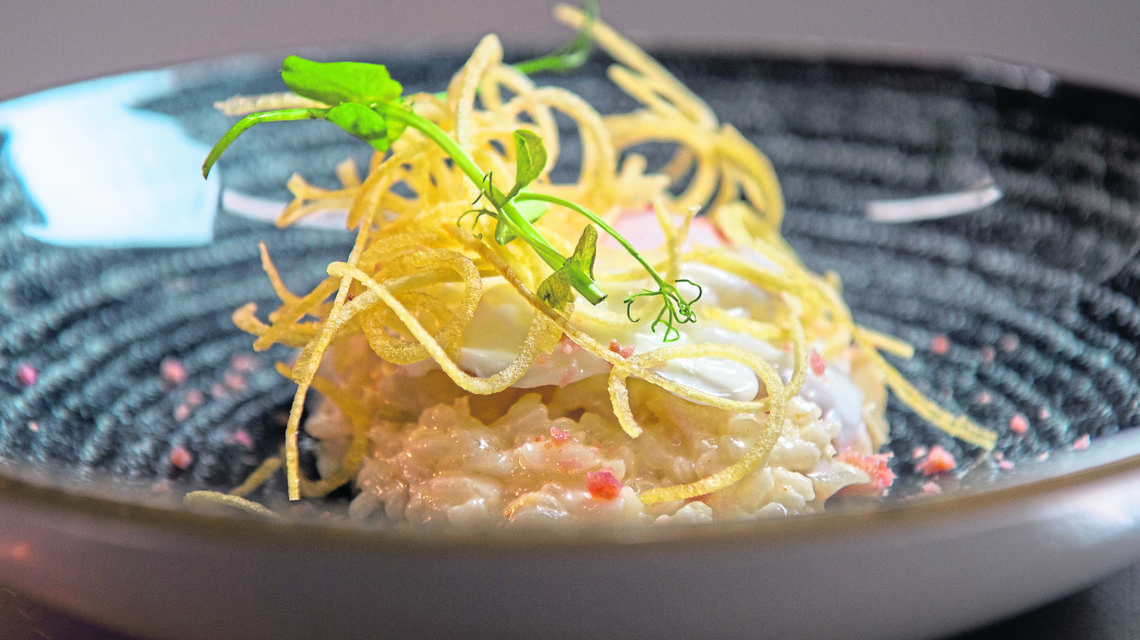 But help is at hand. Wayne Stewart, Chef Proprietor at the excellent Knowes Hotel in nearby Macduff has published a mouth-watering recipe for Cullen Skink Risotto with Poached Hen's Egg (you can get the recipe at https://www.societyaberdeen.co.uk/top-stories/how-to-make-the-knowes-hotels-cullen-skink-risotto-with-poached-hens-egg/).
The poached egg is basic cookery that even I can get right most of the time. But risotto? At least I remembered to get the correct type of rice. And later in the week, I shall be giving it a shot.
Whether this promotes domestic harmony or not remains to be seen. After 50 years of marriage, all the big arguments are long past, and inter-family murder could happen over something that the outside observer would consider breathtakingly trivial. Relationships, especially in close confinement are something that needs to be worked at, even in a context of long familiarity.
Looking after physical health - escaping each day for a 45 minutes brisk walk is one way I am doing that - is but part of the program. Our social environment can trigger mental ill-health. And talking and listening is an important part of avoiding that. Especially the listening bit. Especially listening.
55 years ago when I worked for a few months as a nurse in a psychiatric hospital, the first lesson I learnt was not to hold a mirror up to the unusual behaviour of another. You listen and respond back as if they are behaving normally however loud, irrational, off-the-wall they may seem to you. That offers the opportunity for them to offload and can damp down their behaviour.
Fortunately, our household hasn't got there yet. And due to the forbearance of my spouse - disapproval is non-verbal, that Scottish sideways glance with just the hint of a raised eyebrow, that brooks no response other than blind, unquestioning conformance to her standards - we probably won't make that journey.
One thing that helps is that we have a no mechanical dishwasher. Yup - join the club of the astonished.
Once or twice a day, we foregather at the kitchen sink, Sandra with the dishcloth in hand, me with a dishtowel. She washes. I dry.
Every day we talk to each other, listen to each other. At the sink. No matter how busy the day might otherwise have been.
In our extended family, another challenge looms.
My eight-year-old god-daughter Darcey has been wrenched from the social contact, and even some education, of her school.
Her parents, too, are confined to barracks. And mum - a lady with considerable intelligence and two degrees - asserts that her daughter never listens to her. So how to assume teaching responsibilities?
I am working up some projects for her. Questions that I think, in my older naivety, ought to be answered so that I am better informed. And so my god-daughter learns that she has the skills to find, or develop, the answers. Perhaps too to realise that finding the questions to ask is even more important than finding the solutions.
So here they are.
What is pepper and why? Where does it come from?
What is a wind-chill factor and how do you calculate it? Yesterday's walk demands an answer.
Now that I cannot get my hair cut, will a pigtail suit my silver hair?
No, no. That's one for herself. And I fear the likely answer. I've always whimsically fancied one.
Lesson learned. Cooking is a wee bit more than simply the application of heat to potentially nutritious raw material.
I even managed to win the cookery award at an inter-troop camping competition a few years later. Less of an achievement than it sounds as my main rival Iain - an accomplished master of the camp oven, a tin buried under a fire - had burnt his much-anticipated bacon and egg pie.
Like in Government, at home a female - my spouse - is offering guidance on how I should deal with social distancing. And just as I am listening to the wise words of the First Minister and the Chief Medical Officer, - keep your distance, don't panic buy, no pub nights - I accept without argument the idea that two nights a week are mine to cook for.
Brave, brave.
The poached egg is basic cookery that even I can get right most of the time. But risotto? At least I remembered to get the correct type of rice. And later in the week, I shall be giving it a shot.
Whether this promotes domestic harmony or not remains to be seen. After 50 years of marriage, all the big arguments are long past, and inter-family murder could happen over something that the outside observer would consider breathtakingly trivial. Relationships, especially in close confinement are something that needs to be worked at, even in a context of long familiarity.
Looking after physical health - escaping each day for a 45 minutes brisk walk is one way I am doing that - is but part of the program. Our social environment can trigger mental ill-health. And talking and listening is an important part of avoiding that. Especially the listening bit. Especially listening.
55 years ago when I worked for a few months as a nurse in a psychiatric hospital, the first lesson I learnt was not to hold a mirror up to the unusual behaviour of another. You listen and respond back as if they are behaving normally however loud, irrational, off-the-wall they may seem to you. That offers the opportunity for them to offload and can damp down their behaviour.
Fortunately, our household hasn't got there yet. And due to the forbearance of my spouse - disapproval is non-verbal, that Scottish sideways glance with just the hint of a raised eyebrow, that brooks no response other than blind, unquestioning conformance to her standards - we probably won't make that journey.
One thing that helps is that we have a no mechanical dishwasher. Yup - join the club of the astonished.
Once or twice a day, we foregather at the kitchen sink, Sandra with the dishcloth in hand, me with a dishtowel. She washes. I dry.
Every day we talk to each other, listen to each other. At the sink. No matter how busy the day might otherwise have been.
In our extended family, another challenge looms.
My eight-year-old god-daughter Darcey has been wrenched from the social contact, and even some education, of her school.
Her parents, too, are confined to barracks. And mum - a lady with considerable intelligence and two degrees - asserts that her daughter never listens to her. So how to assume teaching responsibilities?
I am working up some projects for her. Questions that I think, in my older naivety, ought to be answered so that I am better informed. And so my god-daughter learns that she has the skills to find, or develop, the answers. Perhaps too to realise that finding the questions to ask is even more important than finding the solutions.
So here they are.
What is pepper and why? Where does it come from?
What is a wind-chill factor and how do you calculate it? Yesterday's walk demands an answer.
Now that I cannot get my hair cut, will a pigtail suit my silver hair?
No, no. That's one for herself. And I fear the likely answer. I've always whimsically fancied one.
Comments
Post a Comment
Your comments will be read before adding to the blog.
Abuse, illegality or comment at odds with prevailing medical advice will be excluded.