For me, the symbolic date of the 25th of June beckons from the close horizon. That will be the 100th day since my personal lockdown started—twenty days to go. I'm in my twelfth week.
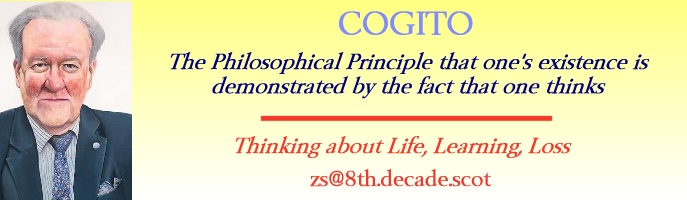
In that period quite a lot has changed—both inside our gates and beyond. For the former, it is time to deploy that most useful of analytic tools - the mirror.
My last haircut was on the 30th of January. Every one of those 126 days since then shows as the hair at the back of my neck peeks (beguilingly?) out from behind.
The face shows signs of a recent shave. Although our broadband (narrowband?) throughput only allows a "soft-focus" image to travel down to join Parliament, I deem it proper to shave as I would have before each previous physical attendance. Standards, standards.
The complexion is more ruddy than before. No, it's not due to increased alcohol intake. But instead to more time outdoors. Indeed, approaching 400 miles of walking in my local area.
I had kind of missed the advice that your local area means within five miles. And I have on several of my long walks have been rather further from the house than that. But even so, only exchanging distant words with a handful of people, thus creating no risk for them, or for me.
The teeth look and feel fine. My dentist generally commends my "mouth keeping", and there's no sign of any deterioration since my last check-up on the 19th of December.
Next to the bathroom mirror are the scales. The daily check shows that I remain within the plus or minus half a kilo range of my normal weight. That puts me, as before, right on the edge of the normal body mass index (BMI) for my height.
Would be good to have edged down about four kilos. But as my exercise regime has continued to convert fat to muscle, the latter is heavier; I am not greatly surprised.
The girth is best measured by the "breeks test" although I can persuade myself that the mirror confirms the result of that test. I am shrinking, a modest amount, around the middle. And the breeks fit more comfortably around my middle.
Indeed the galluses now have an even more vital job than before. If I stand up sans trouser support, the breeks now immediately head south. Not a desirable activity for the public to gaze upon.
Between the ears, there are also changes. I have a bit of time to widen my circle of reading. And I am less often a bit grumpy. I suspect this comes with the increase in exercise.
For years people have been urging me to write my autobiography.
When I have looked at books on the shelf, particularly biography, I have been looking at a finished article. Reading a book is unlikely to be a continuous process. Over many days I find myself picking up, reading a chapter or two, inserting a bookmark, and putting it down. But it's never penetrated my thinking that writing must be similarly episodic.
Mike Russell provided a very useful coda to Winnie Ewing's autobiography on which he had collaborated with her. It was a cookbook for how to write an autobiography. And I have mentally carried it around with as something that seemed to describe an approach that I could use.
And yet the putative size of the finished product has dominated my thinking. Hiding the obvious fact that you write a book a chapter at a time.
Mr Google suggests that the average book is between sixty and eighty thousand words long. By writing every day since lockdown started for me, I somehow have scriven ninety-two thousand words so far.
It's not novel thinking to state that you can only solve a big problem by splitting it down into lots of small ones. My writing has helped with a practical example of that management theory truth.
Outside the gate, things have also been happening.
Our Parliament has become more efficient. Less travelling for many people. A lot of that was "dead time". And widespread adoption of online video-conferencing has made it easier to schedule meetings. And made it easier for them to be back-to-back.
The world's pollutants have dropped—better air quality delivering better health for people. And dramatic drops in greenhouse gas emissions advancing the cause of a greener, cleaner planet.
I have applauded the passage of the banning of smoking in public places by Jack McConnell's administration on many occasions, and in many places. One good cross-check of this policy initiative was a longitudinal study of lung function among bar staff.
They took a group of them and measured lung function before the smoking ban started. And went back later, I think a year later, to test it again. The improvements were quite dramatic. And absolutely proved the value of clean air to health.
I know too that the Chinese authorities, who because of not being required to account for themselves to an electorate, just closed down overnight sources of atmospheric pollution around the 2008 Beijing Olympics, saw huge benefits. Admissions to hospitals in the city for lung conditions plummeted within a month. Health generally improved.
We arrived here without the benefit of a plan. But sure as Li'l Abner, we need a plan to avoid going back to where we came from.
One of the big threats to this comes from the aggressive dismantling of environmental protections in the USA. We shall just need to hope that the next US President brings forward measures that benefit the citizens of that great country and the world beyond it.
In a personal sense that matters to me. My family research shows that only three US states have not played host to relatives of mine at one time or another.
For our NHS, the pandemic has been both challenging and liberating.
Dealing with the disease, coming as it does with uncertain symptoms, no pharmacological interventions, no vaccines, is a huge challenge.
But creating a new model for delivering health care, long talked about, now being delivered via online consultations, widespread adoption of other telemedicine practices has come in overnight. And most critically, transformed the public's attitudes to this way of working. Or so it seems.
The benefits of consultation at a distance are of particular value in rural areas. Next week I shall have a remote check-up with my consultant, which in previous years would have required me to make a round trip of about sixty miles. That personal benefit to me will apply to many.
Today has been one of these busy days.
I have set myself the target of writing a diary every day—tick that box.
But also targetted ten in the morning as the completion time—failed.
They might be personal targets for which I am accountable to no one, but I will need to either re-baseline the plan or get myself better organised.
Better to aim for perfection and fail than to look for mediocracy and succeed.
Perfection still beckons.
In that period quite a lot has changed—both inside our gates and beyond. For the former, it is time to deploy that most useful of analytic tools - the mirror.
My last haircut was on the 30th of January. Every one of those 126 days since then shows as the hair at the back of my neck peeks (beguilingly?) out from behind.
The face shows signs of a recent shave. Although our broadband (narrowband?) throughput only allows a "soft-focus" image to travel down to join Parliament, I deem it proper to shave as I would have before each previous physical attendance. Standards, standards.
The complexion is more ruddy than before. No, it's not due to increased alcohol intake. But instead to more time outdoors. Indeed, approaching 400 miles of walking in my local area.
I had kind of missed the advice that your local area means within five miles. And I have on several of my long walks have been rather further from the house than that. But even so, only exchanging distant words with a handful of people, thus creating no risk for them, or for me.
The teeth look and feel fine. My dentist generally commends my "mouth keeping", and there's no sign of any deterioration since my last check-up on the 19th of December.
Next to the bathroom mirror are the scales. The daily check shows that I remain within the plus or minus half a kilo range of my normal weight. That puts me, as before, right on the edge of the normal body mass index (BMI) for my height.
Would be good to have edged down about four kilos. But as my exercise regime has continued to convert fat to muscle, the latter is heavier; I am not greatly surprised.
The girth is best measured by the "breeks test" although I can persuade myself that the mirror confirms the result of that test. I am shrinking, a modest amount, around the middle. And the breeks fit more comfortably around my middle.
Indeed the galluses now have an even more vital job than before. If I stand up sans trouser support, the breeks now immediately head south. Not a desirable activity for the public to gaze upon.
Between the ears, there are also changes. I have a bit of time to widen my circle of reading. And I am less often a bit grumpy. I suspect this comes with the increase in exercise.
For years people have been urging me to write my autobiography.
When I have looked at books on the shelf, particularly biography, I have been looking at a finished article. Reading a book is unlikely to be a continuous process. Over many days I find myself picking up, reading a chapter or two, inserting a bookmark, and putting it down. But it's never penetrated my thinking that writing must be similarly episodic.
Mike Russell provided a very useful coda to Winnie Ewing's autobiography on which he had collaborated with her. It was a cookbook for how to write an autobiography. And I have mentally carried it around with as something that seemed to describe an approach that I could use.
And yet the putative size of the finished product has dominated my thinking. Hiding the obvious fact that you write a book a chapter at a time.
Mr Google suggests that the average book is between sixty and eighty thousand words long. By writing every day since lockdown started for me, I somehow have scriven ninety-two thousand words so far.
It's not novel thinking to state that you can only solve a big problem by splitting it down into lots of small ones. My writing has helped with a practical example of that management theory truth.
Outside the gate, things have also been happening.
Our Parliament has become more efficient. Less travelling for many people. A lot of that was "dead time". And widespread adoption of online video-conferencing has made it easier to schedule meetings. And made it easier for them to be back-to-back.
The world's pollutants have dropped—better air quality delivering better health for people. And dramatic drops in greenhouse gas emissions advancing the cause of a greener, cleaner planet.
I have applauded the passage of the banning of smoking in public places by Jack McConnell's administration on many occasions, and in many places. One good cross-check of this policy initiative was a longitudinal study of lung function among bar staff.
They took a group of them and measured lung function before the smoking ban started. And went back later, I think a year later, to test it again. The improvements were quite dramatic. And absolutely proved the value of clean air to health.
I know too that the Chinese authorities, who because of not being required to account for themselves to an electorate, just closed down overnight sources of atmospheric pollution around the 2008 Beijing Olympics, saw huge benefits. Admissions to hospitals in the city for lung conditions plummeted within a month. Health generally improved.
We arrived here without the benefit of a plan. But sure as Li'l Abner, we need a plan to avoid going back to where we came from.
One of the big threats to this comes from the aggressive dismantling of environmental protections in the USA. We shall just need to hope that the next US President brings forward measures that benefit the citizens of that great country and the world beyond it.
In a personal sense that matters to me. My family research shows that only three US states have not played host to relatives of mine at one time or another.
For our NHS, the pandemic has been both challenging and liberating.
Dealing with the disease, coming as it does with uncertain symptoms, no pharmacological interventions, no vaccines, is a huge challenge.
But creating a new model for delivering health care, long talked about, now being delivered via online consultations, widespread adoption of other telemedicine practices has come in overnight. And most critically, transformed the public's attitudes to this way of working. Or so it seems.
The benefits of consultation at a distance are of particular value in rural areas. Next week I shall have a remote check-up with my consultant, which in previous years would have required me to make a round trip of about sixty miles. That personal benefit to me will apply to many.
Today has been one of these busy days.
I have set myself the target of writing a diary every day—tick that box.
But also targetted ten in the morning as the completion time—failed.
They might be personal targets for which I am accountable to no one, but I will need to either re-baseline the plan or get myself better organised.
Better to aim for perfection and fail than to look for mediocracy and succeed.
Perfection still beckons.
Comments
Post a Comment
Your comments will be read before adding to the blog.
Abuse, illegality or comment at odds with prevailing medical advice will be excluded.